
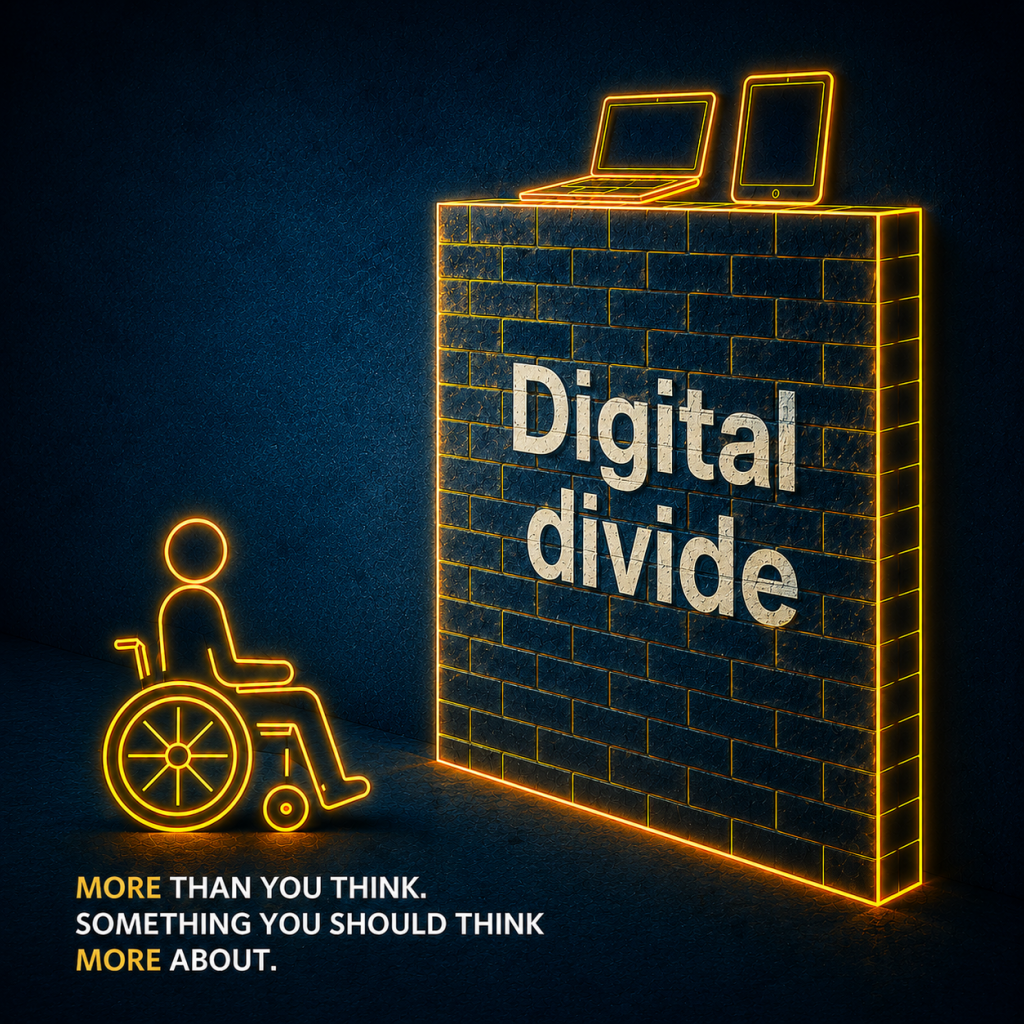
What is the digital divide and what does this mean for individuals with physical disabilities?
What is the digital divide?
The digital divide refers to the gap between people who have equal access to technology, internet, and digital skills; and those who do not.
For individuals with physical disabilities, the digital divide is not just about having the technology, but whether the technology’s design is usable and inclusive to varying physical abilities.
What does non-accessible technology look like?
Many devices, websites, and apps are designed without considering people with limited hand mobility, paralysis, chronic pain, muscular disorders, or other physical disabilities through examples of:
- Tiny buttons or touch targets
- Devices requiring precise hand movements to work
- Touchscreens difficult to use without adaptive tools
- Websites that cannot be navigated with adaptive keyboards or switches
- Screens, websites, or applications that time out quickly
How does this impact everyday life?
Technology is essential for communication, education, banking, work, healthcare, transportation, and social connection. When technology is inaccessible, individuals with disabilities can become isolated and excluded from daily life and community participation.
Particularly with employment, individuals can experience barriers to employment, as many occupations now require online applications, virtual meetings, digital scheduling and payment platforms, and computer-based work tasks.
If workplace software or hiring platforms are inaccessible, people with disabilities may face reduced job opportunities, have difficulty working remotely, and have barriers to occupational achievements and career advancements. As a result, this can create a domino effect of major financial burdens and increased trouble with securing and maintaining safe, accessible, and affordable housing.
How does the digital divide impact accessible housing?
When finding accessible housing in the first place, most personal searches now happen online. This means that typically individuals must rely on rental websites, virtual tours of prospective spaces, online applications, and digital communication with landlords. If websites are difficult to navigate, listings do not include accessibility details, or platforms are not congruent with assistive technology, it can make it harder for people with disabilities to even locate suitable housing options.
When considering smart home technology within homes, if done correctly and able to integrate with adaptive technology, it can greatly improve independence and keep individuals housed when needs change or to allow for aging in place. Examples of smart home technology are:
- Voice-controlled or app-controlled lights
- Automated doors
- Smart thermostats
- Security systems
- Elevator controls
- Emergency response systems
- Automated control of blinds
- Automated cooking appliances
The digital divide is more than a lack of internet or devices; it is a barrier to independence, inclusion, and equal opportunity. For individuals with physical disabilities, inaccessible technology can affect nearly every aspect of daily life, from employment and education to healthcare and housing. As society becomes increasingly dependent on digital systems and smart technology, accessibility must remain a priority in both technology design and housing development and not further the digital divide. Creating inclusive digital spaces and accessible housing environments helps ensure that everyone, regardless of physical ability, can fully participate in their communities, increase opportunities for independence, and most importantly, maintain access to safe and suitable housing.
Technological accessibility is more than you think. And something you should think more about.